


Squid Game,” the South Korean dystopian thriller, took the world by storm in 2021, becoming Netflix’s most-watched series at the time. Its gripping narrative, incisive social commentary, and high-stakes games captivated audiences globally. After a three-year wait, Season 2 premiered on December 26, 2024, reigniting fervor among fans. However, one aspect that sparked significant discussion was its episode count: seven episodes, a reduction from the nine in Season 1. This article delves into the history, rationale, implications, and future trends surrounding the episode count of “Squid Game” Season 2, offering a comprehensive analysis for both casual viewers and dedicated fans. We explore why the season was structured this way, its narrative impact, and what it means for the series’ trajectory.
History of Squid Game’s Episode Structure
Season 1: Setting the Precedent
“Squid Game” Season 1, released on September 17, 2021, consisted of nine episodes, each ranging from 32 to 63 minutes. This structure allowed creator Hwang Dong-hyuk to craft a tightly paced narrative that introduced the deadly games, developed complex characters, and delivered a satisfying conclusion while leaving room for future exploration.
-
Episode Breakdown:
-
Episodes 1–2: Introduced Seong Gi-hun and the premise of the games.
-
Episodes 3–6: Focused on the games (e.g., Red Light, Green Light, Tug-of-War) and character dynamics.
-
Episodes 7–9: Built to the climax, revealing the mastermind and Gi-hun’s resolve.
-
-
Runtime Impact: The nine-episode format provided ample space for world-building, with shorter episodes (e.g., Episode 8 at 32 minutes) balancing intense longer ones (e.g., Episode 9 at 63 minutes).
-
Cultural Impact: The structure contributed to its binge-worthiness, fueling its global success with 1.65 billion viewing hours in its first 28 days.
Anticipation for Season 2
Following Season 1’s success, fans eagerly awaited Season 2. Early announcements suggested a continuation of the nine-episode format, but in November 2024, Netflix confirmed Season 2 would have seven episodes, prompting speculation about creative and production decisions.
-
Initial Expectations:
-
Fans assumed a similar episode count to maintain narrative depth.
-
Hwang’s comments in 2022 hinted at a 2024 release, with no mention of a reduced count.
-
-
Production Context: Seasons 2 and 3 were written and filmed concurrently, suggesting a larger story split into two parts.
Current State: Squid Game Season 2 Episode Count
Official Confirmation and Release
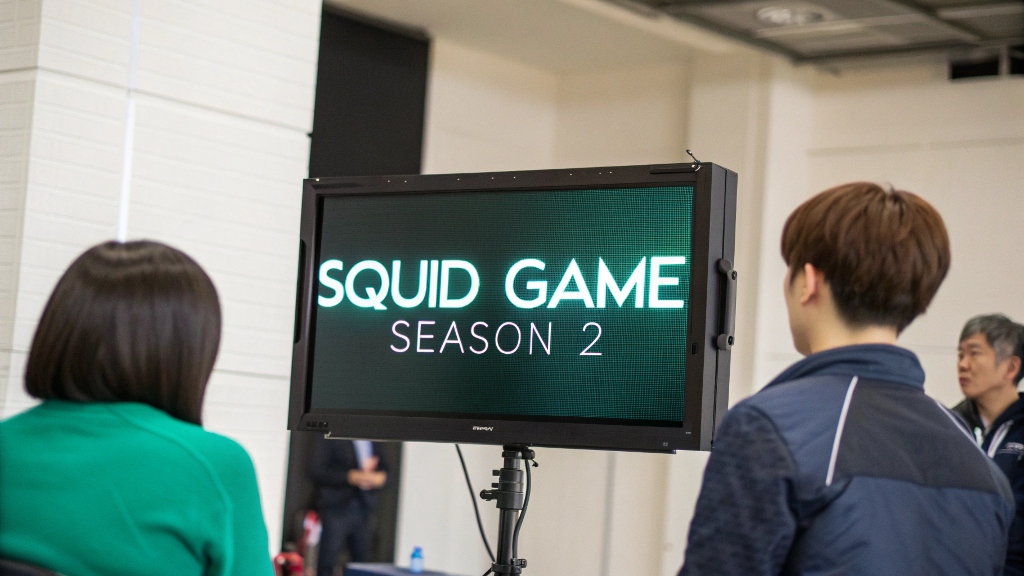
“Squid Game” Season 2, released on December 26, 2024, comprises seven episodes, with runtimes ranging from 51 to 76 minutes, totaling 427 minutes compared to Season 1’s 510 minutes. All episodes dropped simultaneously, adhering to Netflix’s binge-release model.
-
Episode Titles and Runtimes:
-
Episode 1: “Bread and Lottery” – 65 minutes
-
Episode 2: “Halloween Party” – 51 minutes
-
Episode 3: “Tooth or Money” – 61 minutes
-
Episode 4: “Mother and Son” – 62 minutes
-
Episode 5: “The Day I Was Born” – 76 minutes
-
Episode 6: “O X” – 52 minutes
-
Episode 7: “Friend or Foe” – 60 minutes
-
-
Source Confirmation: Netflix’s Tudum and the Squid Game Wiki verified the seven-episode count, with no additional episodes planned for Season 2.
Narrative Structure
The seven episodes focus on Gi-hun’s mission to dismantle the games, introducing new characters and games while deepening the Front Man’s role. The season ends on a cliffhanger, setting up Season 3, due June 27, 2025.
-
Key Plot Points:
-
Episodes 1–2: Gi-hun tracks the games’ organizers, re-entering as Player 456.
-
Episodes 3–5: New games (Red Light, Green Light, Six-Legged Pentathlon, Mingle) unfold, with player voting on continuation.
-
Episodes 6–7: Gi-hun’s rebellion culminates in a tragic confrontation with the Front Man.
-
-
Cliffhanger: The finale, “Friend or Foe,” sees the Front Man, disguised as Player 001, kill Gi-hun’s friend Jung-bae, leaving Gi-hun in despair.
Comparison Table: Season 1 vs. Season 2
|
Aspect |
Season 1 |
Season 2 |
|---|---|---|
|
Episode Count |
9 | 7 |
|
Total Runtime |
510 minutes |
427 minutes |
|
Average Episode Length |
56.7 minutes |
61 minutes |
|
Release Date |
September 17, 2021 |
December 26, 2024 |
|
Games Featured |
6 (e.g., Red Light, Green Light, Tug-of-War) |
3 (Red Light, Green Light, Pentathlon, Mingle) |
|
Narrative Closure |
Semi-resolved with open-ended setup |
Cliffhanger leading to Season 3 |
Key Concepts Behind the Episode Count
Creative Vision: A Two-Part Story
Hwang Dong-hyuk revealed that Seasons 2 and 3 were conceived as a single narrative arc, split due to its length. Episode 7 was chosen as the breaking point because it marked a “big turning point” in Gi-hun’s journey.
-
Hwang’s Rationale:
-
Narrative Inflection: Episode 7’s rebellion and Jung-bae’s death shift Gi-hun’s arc from heroism to guilt and despair.
-
Production Efficiency: Simultaneous filming of Seasons 2 and 3 allowed a cohesive story, with Season 3 in post-production by January 2025.
-
-
Impact on Pacing: The seven-episode structure accelerates the pace, prioritizing action and emotional stakes over extended character backstories.
Netflix’s Influence
Netflix’s decision to split the story reflects a strategy seen in other K-dramas like “Sweet Home,” balancing viewer retention with production timelines.
-
Streaming Trends:
-
Shorter seasons maintain viewer engagement without overwhelming production schedules.
-
Cliffhangers drive anticipation for subsequent seasons, as seen with “Stranger Things” and “The Witcher.”
-
-
Budget Considerations: Season 2’s budget was ₩100 billion (approximately $68.6 million), necessitating efficient storytelling.
Audience Expectations
Fans accustomed to Season 1’s nine episodes expressed mixed reactions to the shorter season, with some feeling it lacked closure, while others appreciated the intensity.
-
Social Media Sentiment:
-
Posts on X highlighted disappointment with the seven-episode count and cliffhanger.
-
Others praised the tighter narrative, citing longer average episode lengths.
-
Benefits of the Seven-Episode Structure
Enhanced Narrative Focus
The reduced episode count streamlines the story, emphasizing Gi-hun’s mission and the new games without diluting the tension.
-
Tighter Pacing:
-
Fewer episodes prevent narrative bloat, maintaining high stakes.
-
Longer runtimes (e.g., Episode 5 at 76 minutes) allow deeper exploration of key moments.
-
-
Character Development: New characters like Hyun-ju, a trans woman, and No-eul, a North Korean defector, receive focused arcs despite the shorter season.
Production Efficiency
Filming Seasons 2 and 3 concurrently optimized resources, reducing the gap between releases compared to the three-year wait for Season 2.
-
Time Savings:
-
Simultaneous production ensured narrative continuity.
-
Season 3’s confirmed June 2025 release minimizes fan wait time.
-
-
Creative Control: Hwang’s ability to write both seasons together preserved his vision.
Viewer Engagement
The cliffhanger ending and shorter season encourage discussion and speculation, keeping “Squid Game” relevant until Season 3.
-
Social Media Buzz:
-
Posts on X and Reddit forums debated the finale’s impact, boosting online engagement.
-
The mid-credits scene teasing new dolls fueled fan theories.
-
-
Global Reach: Season 2’s 68 million views in 72 hours and No. 1 ranking in 92 countries underscore its success.
Challenges of the Seven-Episode Structure
Narrative Abruptness
The cliffhanger ending frustrated some fans, who felt Season 2 lacked standalone resolution compared to Season 1.
-
Fan Criticism:
-
Reviews on Rotten Tomatoes (82% critics, mixed audience) noted the season felt like “Season 2A.”
-
X posts described Episode 7 as a “penultimate” episode, expecting an eighth.
-
-
Unresolved Subplots: Jun-ho’s boat subplot and No-eul’s organ-harvesting arc received limited closure.
Comparison to Season 1
Season 1’s nine episodes set a high bar, making Season 2’s shorter length feel incomplete to some.
-
Expectations vs. Reality:
-
Fans anticipated more games (Season 2 has three vs. Season 1’s six).
-
The reduced count limited exploration of secondary characters like Myeong-gi and Jun-hee.
-
-
Thematic Depth: Some critics argued the shorter season diluted the anti-capitalist critique central to Season 1.
Viewer Retention Risks
Cliffhangers can alienate viewers if the wait for resolution is too long, though Season 3’s 2025 release mitigates this.
-
Historical Parallels:
-
Shows like “The Walking Dead” lost viewers due to unresolved cliffhangers.
-
Netflix’s strategy banks on “Squid Game”’s cultural cachet to retain audiences.
-
Future Trends: Episode Counts and Storytelling
Season 3 and Beyond
Season 3, the series’ final chapter, is expected to have 7–9 episodes, continuing the story from Episode 7’s cliffhanger. Its June 27, 2025, release suggests a return to a tighter release schedule.
-
Predicted Structure:
-
Likely 7–8 episodes, balancing closure with narrative depth.
-
New games, hinted at in the mid-credits scene, will expand the universe.
-
-
Narrative Focus: Gi-hun’s guilt and the Front Man’s motivations will drive the conclusion.
Evolving Streaming Models
Netflix’s approach to “Squid Game” reflects broader trends in streaming, favoring shorter seasons with interconnected arcs.
-
Industry Shifts:
-
Shorter seasons (6–8 episodes) are becoming standard for high-budget dramas.
-
Split seasons (e.g., “Stranger Things” Season 4) maximize viewer retention.
-
-
Global Influence: K-dramas like “Squid Game” are pushing Western platforms to adopt flexible episode counts.
Fan-Driven Content
The seven-episode structure has spurred fan engagement, with theories and analyses thriving online, a trend likely to continue.
-
Community Impact:
-
Reddit and X discussions dissect character arcs and game mechanics.
-
Fan content (e.g., YouTube recaps, podcasts like “Squid Game: The Official Podcast”) extends the series’ lifespan.
-
Review of Squid Game Season 2
“Squid Game” Season 2 delivers a thrilling, if abbreviated, continuation of Gi-hun’s journey. The seven-episode structure, while initially jarring, serves a purpose, intensifying the narrative and setting up a monumental Season 3. The new games—Mingle and Six-Legged Pentathlon—are inventive, though fewer in number, and the addition of voting adds a democratic twist to the survival stakes. Standout performances from Lee Jung-jae (Gi-hun), Park Sung-hoon (Hyun-ju), and Lee Byung-hun (Front Man) elevate the emotional weight, particularly in the devastating finale. However, the cliffhanger and unresolved subplots may frustrate viewers seeking closure. The season excels in character diversity, with Hyun-ju’s arc offering poignant commentary on marginalized identities. Overall, Season 2 is a compelling bridge to the finale, earning an 8/10 for its bold choices, though it doesn’t surpass Season 1’s cohesive brilliance.
Read More Also: How Local Folklore Shapes Game Storytelling
FAQs
1. Why does “Squid Game” Season 2 have only seven episodes?
Hwang Dong-hyuk wrote Seasons 2 and 3 as one story, splitting them at Episode 7 due to a narrative turning point, with Season 3 continuing the arc.
2. Will there be more episodes of Season 2?
No, Season 2 is complete with seven episodes. Additional episodes will come with Season 3, set for June 2025.
3. How does Season 2’s episode count compare to Season 1?
Season 1 had nine episodes (510 minutes), while Season 2 has seven (427 minutes), with longer average episode lengths.
4. Does the shorter season affect the story quality?
The seven episodes tighten the pacing but leave some subplots unresolved, making it feel like part of a larger story, with mixed fan reactions.
5. What can we expect from Season 3’s episode count?
Season 3 is likely to have 7–9 episodes, continuing from Season 2’s cliffhanger, though Netflix has not confirmed the exact number.
Conclusion
The seven-episode structure of “Squid Game” Season 2 reflects a deliberate creative choice by Hwang Dong-hyuk to split a sprawling narrative into two seasons, with Episode 7 serving as a pivotal inflection point. While the shorter length enhances pacing and focus, it challenges viewer expectations for closure, leaving fans eager for Season 3’s resolution in June 2025. The season’s success—68 million views in 72 hours and critical acclaim—underscores its ability to captivate despite its brevity. As streaming platforms evolve, “Squid Game”’s approach may herald a new era of flexible episode counts, balancing creative vision with audience engagement. For fans and analysts, Season 2 is both a thrilling continuation and a promise of more to come, cementing its place as a cultural juggernaut.