

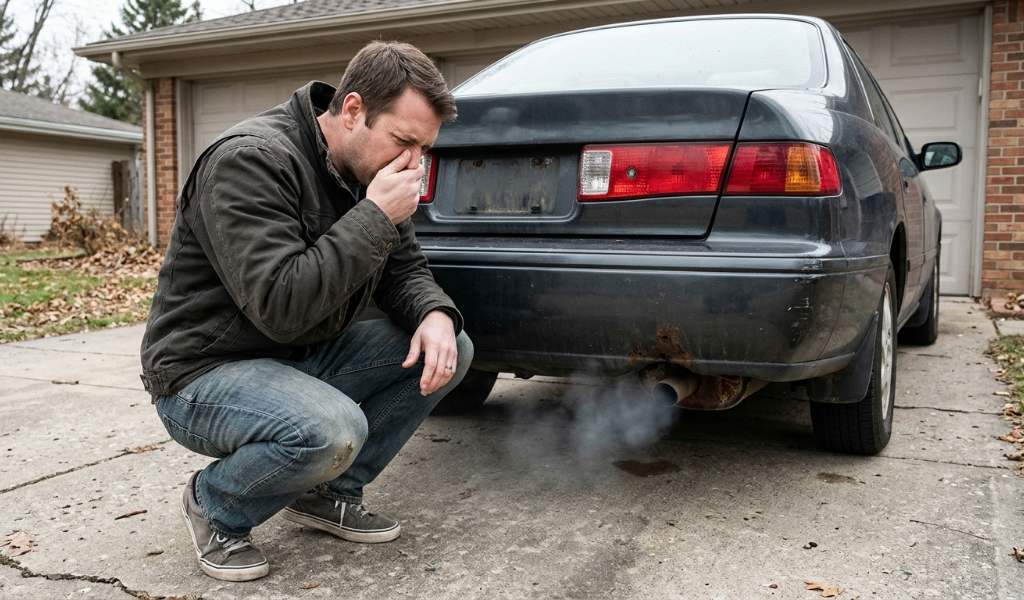
A rotten egg smell usually means your catalytic converter can’t fully break down sulfur from gasoline. This leaves hydrogen sulfide escaping through the exhaust instead of converting into an odorless gas. A failing fuel sensor or weak battery can sometimes cause the same smell.
This article explains what triggers that sulfur odor, how to narrow down the exact cause, and which fixes actually solve the problem. It also covers warning signs you shouldn’t ignore before the issue grows into something more expensive. A little knowledge here can save you a costly repair bill later.
How The Catalytic Converter Creates This Smell
Every gallon of gasoline contains trace amounts of sulfur. Your catalytic converter’s job is to transform that sulfur into odorless sulfur dioxide during combustion. Once the converter weakens, it can no longer finish that chemical process correctly.
Hydrogen sulfide then slips through the exhaust system instead of breaking down fully. Vehicles that sit idle often or take frequent short trips tend to wear converters out faster. Keeping your car properly maintained, including using waterproof all weather car covers during storage, helps reduce moisture buildup that can speed up component wear.
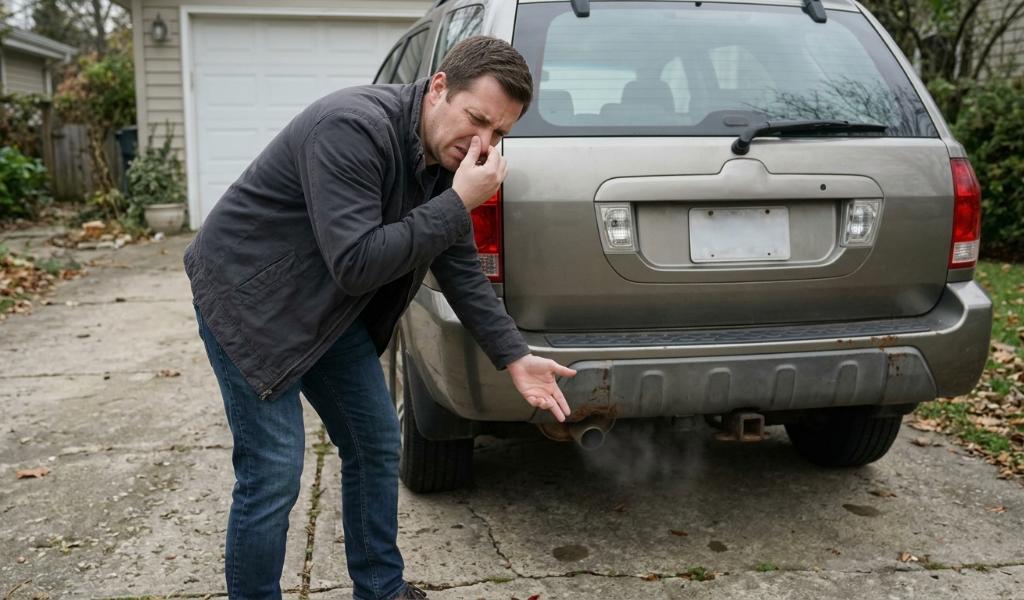
Warning Signs Beyond The Smell Itself
A sulfur smell rarely travels alone. Reduced gas mileage, weaker acceleration, and an illuminated check engine light often show up together. Some drivers also notice rattling sounds coming from beneath the vehicle.
These combined symptoms point toward converter damage rather than a minor fuel issue. Delaying repairs usually lets the damage spread to nearby exhaust components. Catching it early keeps the repair simpler and less expensive overall.
When Engine Performance Issues Are To Blame
Sometimes the smell has less to do with the converter and more to do with how the engine burns fuel. Misfires and uneven fuel mixtures push unburned sulfur compounds straight into the exhaust stream. Drivers often notice this odor around the same time their car starts to kick back when I accelerate unexpectedly.
Both symptoms frequently trace back to a shared issue within the ignition or fuel delivery system. A clogged injector or failing oxygen sensor throws off combustion timing significantly. Consequently, excess fuel overwhelms the converter’s ability to process sulfur efficiently.
How Fuel Tank Design Plays A Role
Fuel system architecture also affects how evenly sulfur gets processed during each drive cycle. Manufacturers design fuel tanks differently depending on region and vehicle type. Many people don’t realize why US cars lack sub fuel tanks, a design detail that can influence fuel flow consistency over time.
Uneven fuel delivery places extra stress on the catalytic converter during longer trips. Therefore, certain fuel tank designs may contribute to earlier converter wear in specific driving conditions. This helps explain why identical engines can develop this smell at different rates.
Could Your Battery Be Causing The Smell Instead
Not every rotten egg smell comes from the exhaust pipe. An overcharging or failing battery can release hydrogen sulfide gas on its own. This odor typically comes from under the hood rather than the tailpipe area.
Look for a swollen battery case, corrosion, or unusual warmth near the terminals. These signs often confirm a battery-related cause rather than an exhaust problem. Replacing the battery usually clears up the smell almost immediately.
How To Track Down The Exact Cause
Finding the real source takes a methodical approach rather than guessing. Working through these steps in order helps avoid unnecessary part swaps.
- Inspect the catalytic converter: listen for rattling and check for reduced power
- Check the battery: look for swelling, corrosion, or signs of overcharging
- Run a diagnostic scan: use an OBD2 reader to spot misfires or sensor faults
- Evaluate fuel quality: try a different fuel station if the smell appeared suddenly
- Consult a mechanic: get a professional opinion if the odor doesn’t go away
Following this order narrows down the cause without wasting money on guesswork. Most causes behind this smell are straightforward to fix once identified correctly. Acting early also protects surrounding engine parts from unnecessary strain.
Conclusion
A rotten egg smell from your exhaust almost always traces back to a struggling catalytic converter, though fuel delivery and battery issues can contribute too. Watching for related symptoms makes the diagnosis much easier to pin down. Fixing the root cause early keeps repair costs manageable and your engine running smoothly.
If the smell sticks around after checking these basics, book an inspection with a trusted mechanic right away. Letting it linger can turn a small fix into a major repair bill. Taking action now protects both your engine and your wallet.
Frequently Asked Questions
Is a rotten egg smell from my car dangerous?
It isn’t immediately dangerous, but it signals a problem worth fixing soon.
Can low quality gas cause this smell?
Yes, fuel with higher sulfur content can trigger this odor temporarily.
How much does catalytic converter repair usually cost?
Repairs can range from a few hundred to over a thousand dollars.
Can a car battery really smell like rotten eggs?
Yes, an overcharging or damaged battery can produce a similar sulfur smell.
Does the smell disappear without repairs?
No, the smell typically continues until the underlying issue gets fixed.